
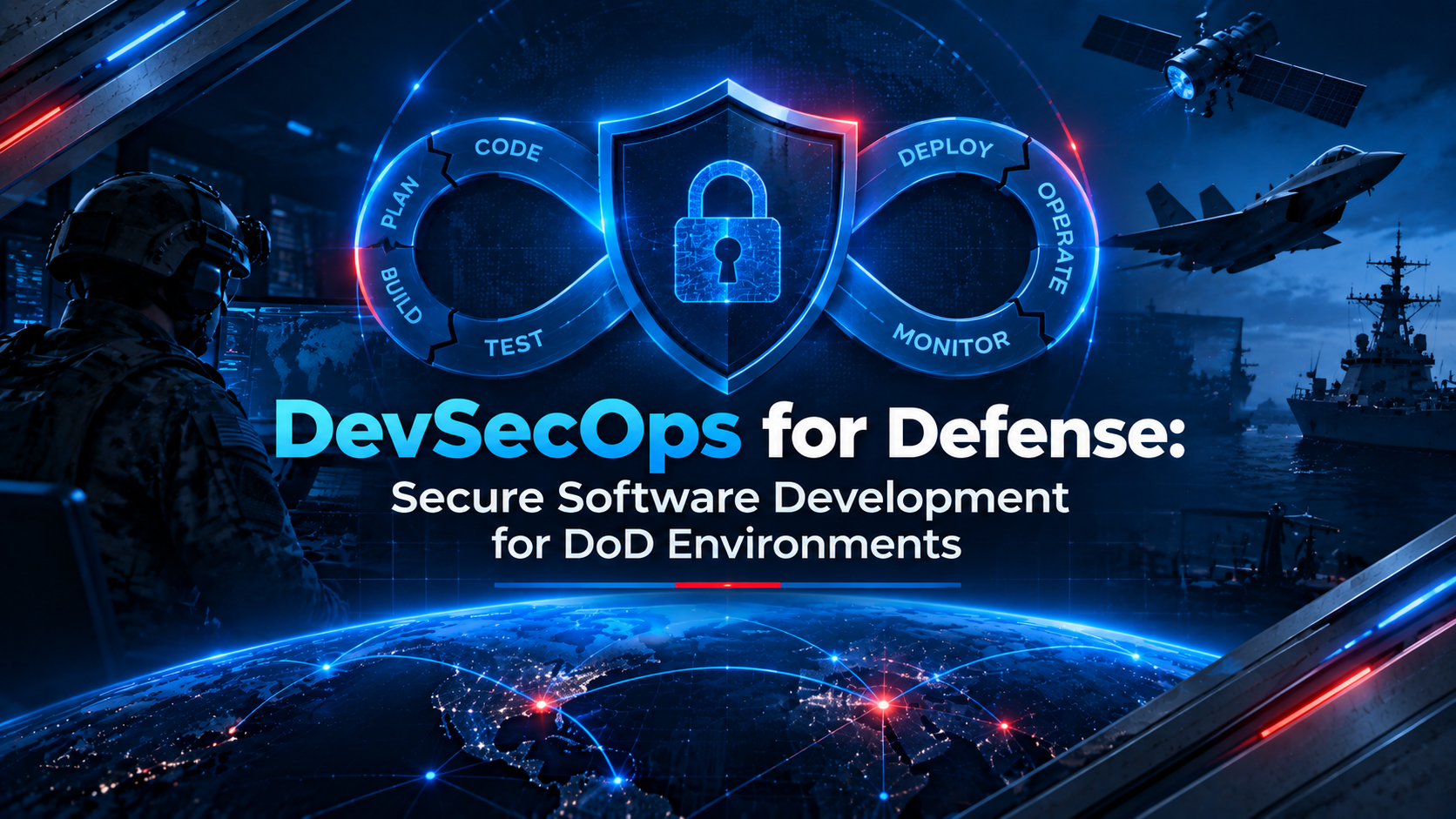
Discover how DevSecOps for Defense strengthens software security, supports compliance, and improves the development of secure DoD software.
TL;DR
- DevSecOps integrates security throughout the software development lifecycle.
- Defense software requires security, reliability, resilience, and traceability.
- Automation helps engineering teams identify vulnerabilities earlier.
- DevSecOps can support DoD software compliance and software assurance activities.
- Secure defense software depends on both the right technologies and disciplined engineering practices.
Software plays a central role in modern defense systems, supporting everything from command and control and communications to intelligence, logistics, and mission operations.
As these systems become increasingly connected and software-dependent, security must be considered throughout development rather than addressed only before deployment.
DevSecOps for Defense brings development, security, testing, and operations into a coordinated software engineering process. By integrating security practices, automation, testing, and continuous feedback into the development lifecycle, teams can identify risks earlier and build software that is better prepared for demanding operational environments.
For organizations developing complex defense and mission-critical software, Mugen.Codes applies disciplined software engineering practices to challenging technical environments.
Its approach aligns secure development with architecture, systems integration, testing, verification, and documentation, helping address the engineering demands that come with developing reliable software for defense applications.
Table of Contents
What Is DevSecOps for Defense?
DevSecOps for Defense is the application of DevSecOps principles to software developed for defense and DoD environments.
Instead of separating development, security, and operations, it integrates security activities across the software development lifecycle.
This means security considerations can begin during requirements and architecture and continue through coding, testing, deployment, and ongoing maintenance.
DevOps vs. DevSecOps in Defense
Traditional DevOps focuses on improving collaboration and automation between development and operations. DevSecOps extends this model by making security a shared responsibility across the development process.
In a defense environment, this can involve:
- Defining security requirements during planning and architecture
- Automating security and vulnerability testing
- Monitoring software and infrastructure after deployment
- Maintaining configuration and change visibility
- Recording evidence needed for verification and assurance
The goal is not simply to add more security tools. It is to make security part of the engineering workflow.
Why DevSecOps Matters for DoD Software Development
Defense software operates in environments where security issues can have significant operational consequences.
Development teams therefore need processes that account for security while also maintaining reliability, traceability, and controlled delivery.
Security Requirements
DevSecOps helps teams address security throughout development by incorporating activities such as threat analysis, secure coding, vulnerability scanning, access control, and security testing into established workflows.
Addressing these concerns earlier can give engineering teams greater visibility into potential weaknesses before software reaches operational environments.
Mission-Critical Software
Many defense systems depend on software that must remain reliable under demanding operational conditions. DevSecOps supports this requirement by combining security practices with testing, verification, configuration management, and continuous monitoring.
This helps teams consider security alongside other important software qualities such as:
- Reliability
- Resilience
- Availability
- Performance
- Maintainability
Controlled Software Delivery
Defense software development often involves complex systems, multiple stakeholders, and strict requirements for managing changes. Automated pipelines can help standardize builds, testing, security checks, and deployment processes.
With appropriate controls, this creates a more consistent path from code changes to validated software while improving visibility into what changed, how it was tested, and whether required checks were completed.
Key DevSecOps Practices for Defense Software
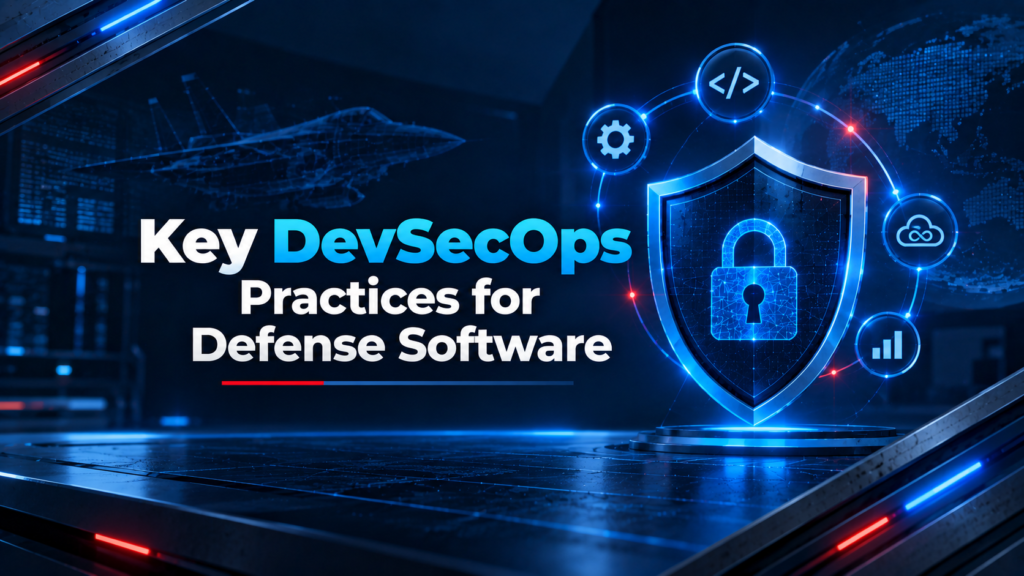
Effective DevSecOps for Defense integrates security into everyday software engineering activities.
Instead of relying on a final security review, teams address security, testing, delivery, and monitoring throughout the software lifecycle.
Security From the Beginning of the SDLC
Security should be considered from the earliest stages of software development. Requirements, architecture, and design decisions can all influence how well a system handles potential threats.
Key practices include:
- Defining security requirements early
- Conducting threat modeling and risk analysis
- Applying secure architecture principles
- Following secure coding practices
- Reviewing dependencies and potential attack surfaces
Building security into the foundation of a system helps teams identify and address vulnerabilities before they become more difficult to remediate.
Automated Security Testing
Automated security testing allows development teams to evaluate software continuously as it changes. Security checks can be integrated directly into development and delivery pipelines alongside functional testing.
Common practices include:
- Static application security testing (SAST)
- Dynamic application security testing (DAST)
- Software composition analysis (SCA)
- Dependency and vulnerability scanning
- Automated security regression testing
This approach gives engineering teams faster feedback and helps identify potential weaknesses earlier in development.
Continuous Integration and Continuous Delivery
Continuous integration and continuous delivery (CI/CD) provide a structured way to build, test, validate, and release software. In defense environments, security checks can be incorporated into these pipelines alongside functional and quality testing.
A secure CI/CD process can include:
- Automated builds and testing
- Code and dependency analysis
- Security gates before deployment
- Version control
- Configuration validation
- Controlled release processes
This creates a consistent path from code changes to validated software while maintaining visibility into development activities.
Continuous Monitoring and Vulnerability Management
Security does not end when software is deployed. Continuous monitoring helps teams maintain visibility into applications, infrastructure, dependencies, and potential vulnerabilities throughout the operational lifecycle.
Effective vulnerability management can involve:
- Monitoring deployed systems
- Identifying newly discovered vulnerabilities
- Prioritizing remediation
- Tracking security issues through resolution
- Monitoring software dependencies
- Reassessing systems as environments change
This ongoing approach helps engineering teams respond to changing risks rather than treating security as a one-time assessment.
DevSecOps and DoD Software Compliance
DevSecOps can support the documentation, traceability, testing, and control processes involved in regulated defense software environments.
Integrating these activities into development workflows can make compliance-related evidence easier to maintain as software evolves.
Key areas include:
- Requirements traceability: Connecting software requirements to implementation, testing, and verification activities.
- Security documentation: Maintaining records of security requirements, assessments, configurations, and relevant engineering decisions.
- Configuration and change management: Controlling software versions, configurations, and changes throughout development and deployment.
- Testing and verification: Providing structured evidence that software has been tested against defined requirements and expected behaviors.
The specific compliance and authorization requirements depend on the system, program, environment, and applicable DoD policies and standards.
DevSecOps and the DoD Software Factory
A DoD software factory provides an environment and set of processes for developing, testing, securing, and delivering software in a repeatable way.
DevSecOps practices can be embedded into these environments through automated pipelines, reusable security controls, testing frameworks, and standardized development processes.
The goal is to make secure software delivery more consistent and traceable while giving engineering teams the workflows needed to manage complex defense software throughout its lifecycle.
Challenges of Implementing DevSecOps in Defense
Implementing DevSecOps in defense environments involves more than adopting new tools.
Engineering teams often need to work within existing architectures, strict security requirements, and complex operational environments.
Legacy Systems and Infrastructure
Many defense organizations operate software and infrastructure that have evolved over long periods. These legacy environments may not have been designed for modern CI/CD pipelines, automated security testing, or continuous deployment.
Modernizing them can require careful integration, incremental upgrades, and a clear understanding of existing system dependencies.
Complex and Distributed Environments
Defense software may operate across interconnected platforms, edge environments, data centers, and other distributed infrastructure. Connectivity and resource constraints can make consistent development, testing, deployment, and monitoring more challenging.
DevSecOps practices therefore need to account for the technical and operational characteristics of each environment.
Security and Compliance Requirements
Defense software must address security requirements alongside functional and operational requirements. Teams may also need to maintain extensive documentation, testing evidence, configuration records, and traceability throughout the software lifecycle.
Embedding these activities into development workflows can help reduce the separation between engineering and security processes.
Multiple Teams and System Dependencies
Defense programs can involve government organizations, contractors, software teams, system integrators, and third-party technology providers. Each may contribute components or services to the wider system.
Clear interfaces, version control, documentation, and communication are important for maintaining security and interoperability across these dependencies.
Technologies Supporting DevSecOps for Defense
Technology provides the foundation for automating many DevSecOps activities, but tools should support an established engineering process rather than replace it.
Containerization and Orchestration
Containers can provide consistent application environments across development, testing, and deployment. Orchestration platforms can then help manage applications across distributed infrastructure.
For defense applications, containerized environments also require appropriate controls for images, dependencies, configurations, access, and runtime security.
Infrastructure as Code
Infrastructure as Code (IaC) allows teams to define and manage infrastructure through version-controlled configuration files.
This can help improve:
- Configuration consistency
- Infrastructure repeatability
- Change tracking
- Automated provisioning
- Security validation
Automated Security Tooling
Security tools can be integrated into development pipelines to continuously assess source code, dependencies, infrastructure, and applications.
Examples include:
- Static and dynamic security testing
- Dependency scanning
- Vulnerability assessment
- Secret detection
- Container security scanning
- Infrastructure security checks
AI and Automation in DevSecOps
AI and automation can support activities such as code analysis, vulnerability identification, testing, anomaly detection, and issue prioritization.
In defense environments, however, these capabilities should be implemented with appropriate controls around security, data handling, validation, and human oversight.
Building a Secure DevSecOps Pipeline for DoD Environments
A secure DevSecOps pipeline connects security and engineering activities from initial requirements through deployment and ongoing operations.
- Requirements and threat analysis: Identify security, operational, and system requirements while assessing potential threats.
- Secure architecture and design: Build security considerations into system architecture and technical design decisions.
- Secure development: Apply secure coding practices and manage software dependencies throughout development.
- Automated security analysis: Scan code, dependencies, configurations, and infrastructure for potential vulnerabilities.
- Security testing: Validate software against security requirements through automated and targeted testing.
- Deployment validation: Verify that builds, configurations, security controls, and required checks are complete before deployment.
- Continuous monitoring: Monitor applications and infrastructure for vulnerabilities, configuration changes, and potential security issues.
- Vulnerability remediation: Investigate, prioritize, and address identified vulnerabilities throughout the software lifecycle.
- Documentation and traceability: Maintain records connecting requirements, changes, testing, verification, and deployment activities.
Together, these stages create a continuous engineering cycle where security remains part of software development from the initial design through operational maintenance.
How Mugen.Codes Supports Secure Defense Software Engineering
Building secure defense software requires more than implementing security tools.
It requires engineering practices that account for complex requirements, system dependencies, operational constraints, and the need for reliable software throughout its lifecycle.
Mugen.Codes applies a structured software engineering approach to complex technical environments, combining architecture, integration, testing, verification, and documentation to support secure and dependable software development.
Engineering for Complex Defense Environments
Defense software can involve demanding technical requirements, interconnected systems, and challenging operational conditions. Mugen.Codes approaches these environments with an emphasis on understanding system requirements, technical constraints, and the relationships between software components.
This helps create software solutions that are designed around the needs of the wider system rather than developed in isolation.
Secure and Reliable Software Architecture
Security and reliability need to be considered at the architectural level. Mugen.Codes develops software architectures with attention to system behavior, dependencies, resilience, and maintainability.
This approach helps establish a stronger foundation for software that must operate reliably within demanding environments.
Systems Integration and Interoperability
Defense systems rarely operate independently. Software often needs to exchange data and interact with other applications, platforms, sensors, and hardware.
Mugen.Codes supports systems integration and interoperability by addressing interfaces, dependencies, data flows, and communication between connected systems.
Testing, Verification, and Documentation
Testing and verification provide important evidence that software behaves according to its requirements. Mugen.Codes incorporates structured testing, verification, and technical documentation into the engineering process.
This can include:
- Requirements traceability
- Software testing and validation
- Verification activities
- Configuration and change documentation
- Technical system documentation
Mission-Critical and Emerging Systems
Defense technology continues to evolve, creating new software engineering requirements across mission-critical and emerging systems. Mugen.Codes supports development in technically demanding environments where software needs to accommodate evolving requirements and complex system interactions.
Its engineering approach combines established software development practices with technologies and architectures suited to modern technical challenges.
FAQs
DevSecOps for Defense applies DevSecOps principles to defense software development by integrating security into requirements, architecture, development, testing, deployment, and operations.
DoD software can operate within complex and mission-critical environments where security, reliability, traceability, and controlled software delivery are important. DevSecOps brings these considerations into the development lifecycle rather than treating security as a separate final-stage activity.
DevSecOps integrates practices such as secure coding, automated security testing, vulnerability scanning, continuous monitoring, and security validation into software development workflows. This gives teams opportunities to identify and address security issues throughout the software lifecycle.
DevSecOps can incorporate requirements traceability, testing evidence, configuration management, documentation, and security controls into development workflows. The specific compliance requirements depend on the applicable program, system, environment, and DoD policies or standards.
Key practices include security planning, threat analysis, secure architecture, secure development, automated security testing, CI/CD security controls, continuous monitoring, vulnerability management, and maintaining documentation and traceability.
Final Thoughts on DevSecOps for Defense
DevSecOps provides a structured approach to integrating security throughout the software development lifecycle.
For defense environments, this means bringing security together with architecture, development, testing, deployment, and ongoing operations.
Automation can strengthen this process by supporting security testing and monitoring, while documentation and traceability help teams maintain visibility across software changes and verification activities.
Ultimately, secure defense software depends on disciplined engineering practices that account for the technical and operational demands of mission-critical environments.
Ready to build secure, reliable software for demanding defense environments?
Explore Mugen.Codes to discover how its software engineering capabilities can support secure development, systems integration, testing, and verification throughout the software lifecycle.